

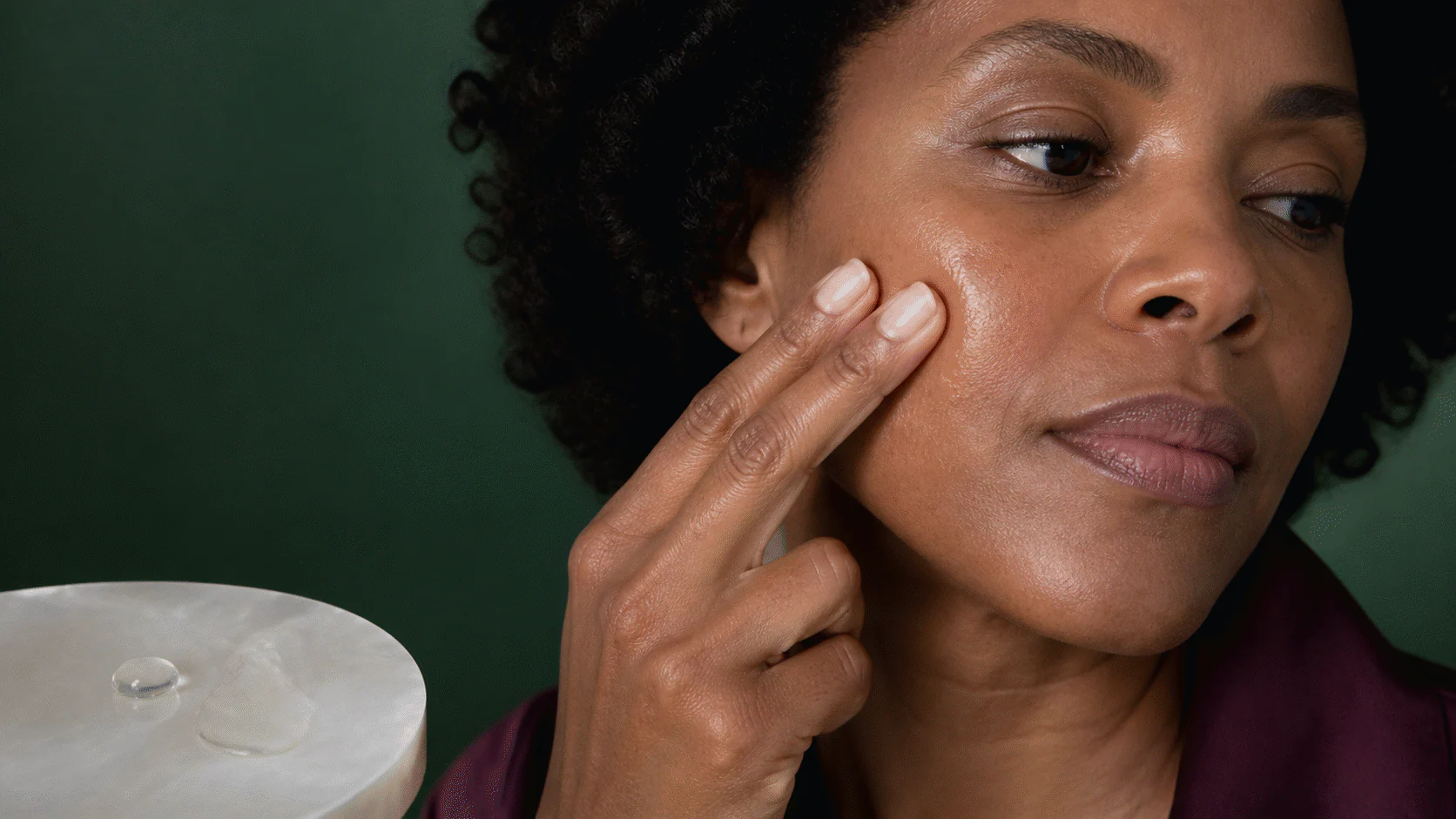
The evidence around squalane is not a single ladder from weak to proven. Different methods answer different questions. Squalane is the hydrogenated, oxidation-resistant form related to squalene. It is an emollient rather than a water source. Oils can reduce rough feel and help limit evaporation, but very dry skin often benefits from water, humectants and emollients together.
Identify the evidence unit
The first task is to identify what “squalane” referred to in the research. It may be a purified molecule, a supplier blend, a group of related materials or a finished regimen containing squalane, jojoba oil, meadowfoam oil. Results belong to that tested unit. An INCI match on another bottle is not enough to transfer them intact.
A split-face study controls some person-to-person variation, though product migration, side preference and measurement technique can complicate interpretation. The design is clever; it is not automatically decisive.
A split-face study controls some person-to-person variation, though product migration, side preference and measurement technique can complicate interpretation. The design is clever; it is not automatically decisive.
Read the endpoint literally
Hydration readings describe water-related properties near the surface. They can explain temporary plumping and smoother texture, but they do not measure facial volume or prove that collagen increased.
Adverse events and withdrawals belong beside efficacy. A material that improves an average score while causing unacceptable irritation may be a poor choice for dry or reactive midlife skin.
Check the conditions around the number
For squalane, concentration without assay is incomplete. Supplier solutions can contain water, solvent, preservative and a fraction of the highlighted active. The study may also use a different grade or vehicle from the product being discussed. Those differences are not footnotes when stability or delivery is central to the mechanism.
Ask whether the comparator was untreated skin, baseline, placebo, vehicle or an active product. Each comparison answers a different question and supports a different sentence.
Population boundaries matter. Age, baseline dryness, skin tone, health status and anatomical site affect relevance. Evidence does not become universal because the abstract uses confident language.
What the paper lets us say
A fair conclusion about squalane preserves the material, vehicle, population, duration and endpoint. It may support plausibility, hydration, comfort or a measured appearance change. It does not automatically support deep delivery, restored tissue, treatment of a hormonal transition or performance by every formula containing squalane, jojoba oil, meadowfoam oil.
That sentence is longer than the marketing version. It is also the sentence the research can carry.
Details that change the interpretation
To evaluate “Why Squalane Works So Well in Lightweight Facial Oils,” keep the study question intact. Research on squalane may test a pathway, a raw material, an instrument reading or a participant’s perception, and those results carry different weights. Concentration matters only with grade and active assay; a percentage without that context can compare unlike materials. The most defensible statement stays with the tested population, vehicle, duration and endpoint. Anything beyond that is an inference… sometimes a reasonable one, but still an inference that should be labeled rather than polished into certainty.
For this squalane question, photography supports evaluation only when conditions are controlled. Processing, lens choice, distance, expression, recent cleansing and surface moisture can manufacture a persuasive difference.
For this squalane question, a product change can create downstream testing work. Altering a preservative, botanical extract, package or active concentration may affect stability and microbial control.
For this squalane question, skin tone deserves explicit attention in study populations and photography. Redness, pigmentation and surface contrast may present differently, while imaging systems can introduce limitations.
For this squalane question, the absence of stinging does not prove efficacy, and stinging does not prove activity. Sensation can arise from pH, solvents, fragrance, barrier condition or several ingredients together.
For this squalane question, a restrained conclusion can still guide a purchase. Knowing that a product may improve surface hydration rather than rebuild anatomy is not disappointing information; it is a clearer expectation.
For this squalane question, occlusion, humectancy and emollience solve related but different problems. Comfortable products often combine those functions instead of asking one celebrated ingredient to perform every job.
This article is educational and discusses cosmetics, not medical treatment. It does not diagnose a skin condition or replace individualized advice from a qualified healthcare professional.