

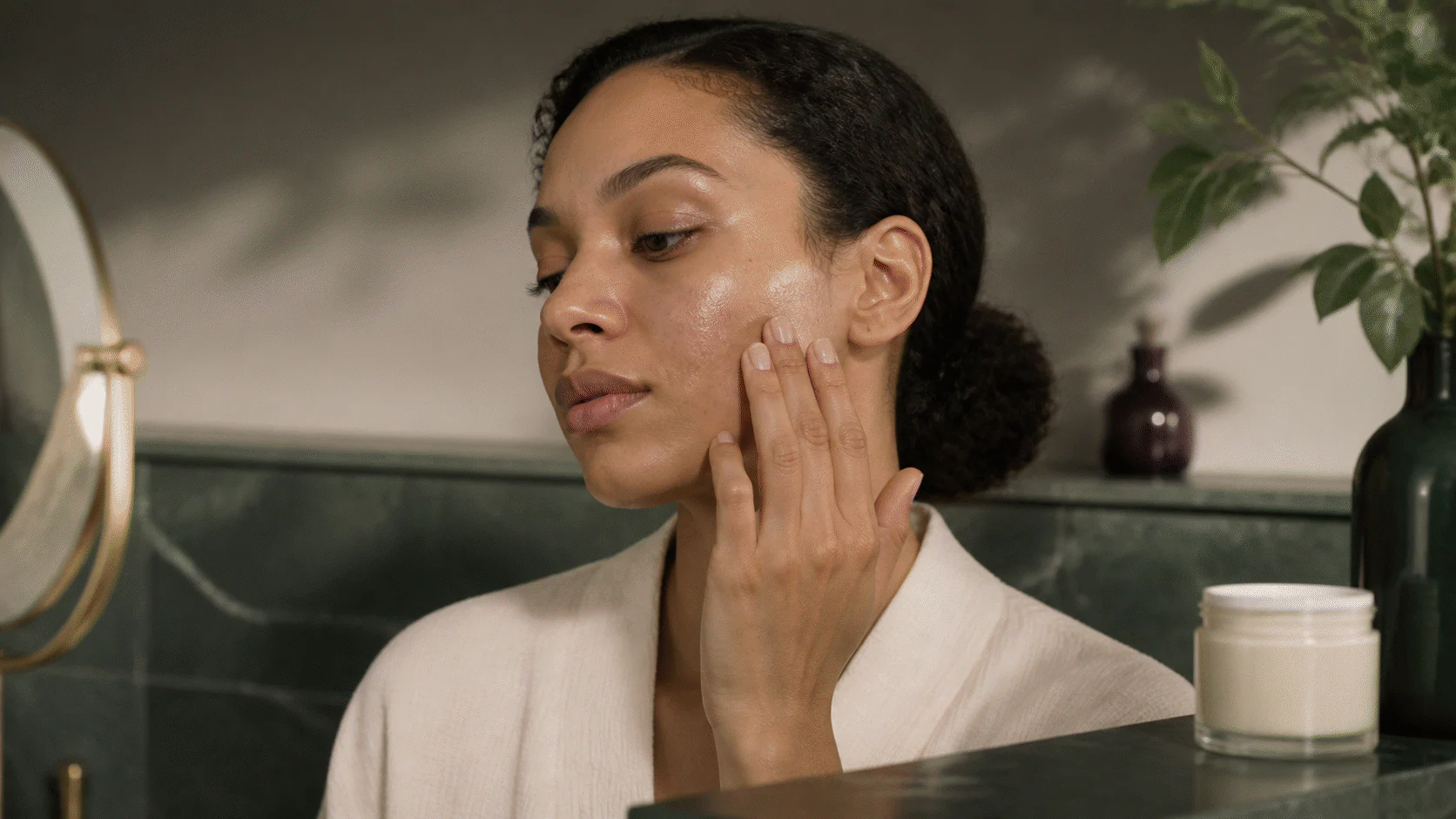
Most people do not need another mixing chart for exfoliation. They need a sensible way to choose, introduce and evaluate one product. Acid identity, pH, free-acid concentration, vehicle and contact time influence exfoliation. Sensation is not a calibrated efficacy measure, and overuse can increase dryness and irritation.
Decide what problem you are solving
With exfoliation, the useful target might be dry feel, tightness, rough texture, visible fine lines, uneven-looking tone or difficulty tolerating a routine. Pick one primary concern. A product cannot be evaluated fairly when success means every favorable change at once.
If the routine feels heavy or sticky, the vehicle may be the real problem. A lower concentration in a more usable base can outperform a stronger product that stays in the cabinet.
If irritation is already present, simplify before adding another active. Use a mild cleanser, a moisturizer that has been comfortable before and broad-spectrum sun protection. Persistent or severe symptoms need clinical attention.
Read the product rather than the trend
An ingredient list containing glycolic acid, lactic acid, salicylic acid, gluconolactone confirms presence, not exact concentration, supplier grade or stability. Look for realistic directions, compatible packaging, a clear function and claims that stay near measurable cosmetic outcomes. A crowded label is not automatically a sophisticated formula.
Discovery size changes the commitment, not the safety standard. A tester still needs an accurate label, traceable lot, suitable package and a finished formula that has passed its release gates.
Packaging should fit the formula and use pattern. Pumps reduce repeated open contact compared with jars, while light-protective containers may help sensitive materials. No package makes poor preservation acceptable.
Introduce one change
Keep the surrounding routine stable. Apply the new product at a consistent frequency and amount, beginning conservatively when skin is reactive. A small-area use test may reveal obvious intolerance, but it cannot guarantee that delayed allergy or full-face irritation will not occur.
Pilling is often a film interaction among polymers, powders, silicones and application amounts. It is not evidence that dead skin is rolling away. Try less product or more dry-down time before abandoning the formula.
Record comfort, tightness, visible redness, flaking and the primary appearance goal. Photographs are more useful when lighting, distance, time of day and expression remain similar.
The measured answer
Acid identity, pH, free-acid concentration, vehicle and contact time influence exfoliation. Sensation is not a calibrated efficacy measure, and overuse can increase dryness and irritation. In practical terms, choose a formula that fits the concern and routine, then judge it by a realistic cosmetic endpoint. With exfoliation, restraint is not a lack of ambition. It is how a useful answer remains believable.
Details that change the interpretation
The practical value of “More Tingling Does Not Mean More Exfoliation” is a better decision, not a longer routine. A shopper considering exfoliation can define one concern, select a complete formula containing materials such as glycolic acid, lactic acid, salicylic acid, gluconolactone, introduce it without changing everything else and watch for both comfort and the chosen cosmetic outcome. If the product causes persistent burning, swelling, itch or rash, stop. If it simply fails to transform deep facial anatomy, that is not evidence the routine was used incorrectly. It is evidence that cosmetic expectations need to remain attached to cosmetic capabilities.
For this exfoliation question, season and climate can change the baseline. A formula tested during a humid month may feel or perform differently in heated winter air, which is why context belongs beside averages.
For this exfoliation question, preservatives, antioxidants and chelators do different work. Tocopherol may slow oxidation in oils; it does not preserve a water-based serum against bacteria, yeast and mold.
For this exfoliation question, the one-percent line limits what ingredient order can reveal. Below that threshold, list position is a poor concentration calculator.
For this exfoliation question, cosmetic and drug status turns on intended use, including claims. A sentence about treating disease or changing body structure does not become cosmetic because it appears beside moisturizers.
For this exfoliation question, the absence of stinging does not prove efficacy, and stinging does not prove activity. Sensation can arise from pH, solvents, fragrance, barrier condition or several ingredients together.
For this exfoliation question, a restrained conclusion can still guide a purchase. Knowing that a product may improve surface hydration rather than rebuild anatomy is not disappointing information; it is a clearer expectation.
This article is educational and discusses cosmetics, not medical treatment. It does not diagnose a skin condition or replace individualized advice from a qualified healthcare professional.